Marble has long fascinated people, often noted for its striking beauty and unique texture. Yet, many wonder, "Why does marble feel cold to the touch?" This intriguing phenomenon can be explained by marble's high thermal conductivity. According to Dr. Sarah Thompson, a renowned geologist, "The sensation of coldness comes from the stone's ability to draw heat quickly from the skin."
Studies indicate that marble's density and specific heat capacity allow it to absorb heat more effectively than many materials. This quality makes it popular in architecture and interior design. A report from the American Society of Interior Designers highlights that marble is often favored for countertops and flooring due to its aesthetic appeal and temperature properties.
In a world where home design combines functionality and aesthetics, understanding why marble feels cold is essential. It reflects a broader trend in materials science that prioritizes both beauty and practicality. However, one must consider that while marble looks stunning, its cold touch may not be ideal in all settings. It can create an uncomfortable environment if not used thoughtfully.
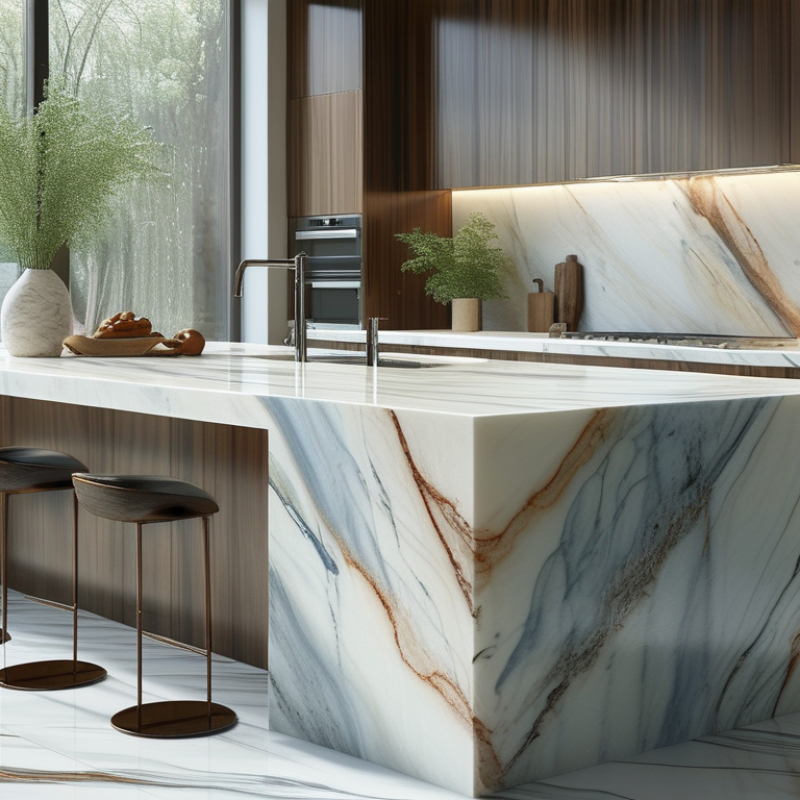
Marble is a metamorphic rock known for its unique beauty and durability. Formed from limestone, it undergoes recrystallization under heat and pressure. This process gives marble its distinctive patterns and colors. The primary component of marble is calcite, which contributes to its physical properties, such as high compressive strength. According to the U.S. Geological Survey, marble ranks high on the Mohs hardness scale, typically between 3 and 5.
Marble’s thermal properties are fascinating. It retains coldness due to its density and thermal conductivity. This means it conducts heat away from your hand quickly, creating that refreshing touch. A study conducted by the American Institute of Architecture shows that marble's temperature can stay lower than ambient air, especially in hot conditions. This quality enhances its appeal in countertops and flooring, where aesthetic and functional benefits align.
**Tip:** When selecting marble for your home, consider its cooling properties. Suitable for warm climates, it offers a luxurious feel without the added heat.
Marble’s beauty comes with fragility. It can scratch or stain more easily than other stone materials. Regular maintenance is crucial for preserving its luster. Sealants can help provide a protective layer, but they are not foolproof. Recognizing these aspects can ensure you enjoy marble’s luxury while preventing potential damage.
| Property | Description |
|---|---|
| Thermal Conductivity | Marble has high thermal conductivity, which allows it to feel cool to the touch, especially in warm environments. |
| Composition | Composed mainly of calcite or dolomite, which are crystalline forms of calcium carbonate. |
| Color Variations | Colors can range from white to black, often with veins or patterns created by the presence of other minerals. |
| Density | Marble is dense, contributing to its coolness and weight, making it a preferred choice for countertops and flooring. |
| Porosity | Marble is porous which means it can absorb liquids, making it prone to staining without proper sealing. |
| Uses | Commonly used in sculpture, architecture, and interior design for its aesthetic appeal and durability. |
: Marble is primarily made of calcite and is formed from limestone through recrystallization under heat and pressure.
Marble has high thermal conductivity, which quickly transfers heat away from your skin, creating a cooling sensation.
Regular cleaning and sealing are vital. Sealants can protect against scratches and stains, but they require periodic reapplication.
Yes, marble’s cooling properties make it ideal for warm environments. It offers luxury without heating up your space.
Use area rugs to warm cold surfaces and adjust room temperatures with fans or heaters for better comfort.
While marble is beautiful and strong, it can be fragile. It may scratch or stain more easily than other materials.
The temperature of marble is typically lower than body temperature, which enhances the feeling of coldness when touched.
Yes, while marble looks luxurious, its tendency to scratch and stain requires careful maintenance to keep it looking good.
Experimenting with tactile-friendly materials can help. Area rugs and other soft coverings often create a more pleasant living environment.
Marble, a natural stone composed mostly of calcite, is known for its unique properties, including its aesthetic appeal and thermal conductivity. Understanding why marble feels cold to the touch involves exploring the concept of thermal conductivity, which is the ability of a material to conduct heat. When we touch marble, our body heat is quickly transferred to the marble. This rapid heat transfer creates a sensation of coldness because marble efficiently absorbs heat from our skin, making it feel cooler than many other materials.
Additionally, the perceived temperature of surfaces can be influenced by environmental factors and individual sensitivity to temperature variations. Therefore, when considering the question "Why does marble feel cold to the touch," it becomes clear that both the material's thermal properties and our body's response to temperature play significant roles in this phenomenon. The combination of marble’s ability to draw heat away quickly and the surrounding conditions explains why it is often perceived as cold.

 Gem Marble