“Why is my white marble turning yellow” is a common question among homeowners and property managers. The answer is rarely simple. White marble can develop yellow patches, dull edges, or uneven staining over time. Several causes may be involved.
Moisture can carry iron minerals through the stone. Oil, wax, and unsuitable sealers may also darken its surface. Poor cleaning habits create another problem. A harsh product can leave residue or damage the finish. In some cases, old adhesive, grout, or metal beneath the marble causes discoloration. The yellow area may look superficial, but the source can sit below the surface.
A careful inspection should come before any repair. Look closely near sinks, shower corners, radiators, and metal fixtures. Check whether the color changes after the marble dries completely. Test any cleaner on a hidden section first. Never assume that bleach or vinegar will solve the problem. They may worsen etching or weaken surrounding materials.
The correct treatment depends on the cause. A stone-care professional may recommend poulticing for deep mineral stains, gentle cleaning for surface residue, or sealer removal when a coating has aged. Product labels and marble manufacturer guidance deserve attention. Professional experience matters, especially with valuable slabs or historic interiors. Some repairs take several applications. That can feel disappointing.
A brighter appearance does not always mean the marble is fully restored. Documenting the stain, testing cautiously, and reviewing the stone’s history creates a more reliable plan. This guide explains the likely causes, safe cleaning methods, professional treatments, and prevention steps.
What Causes White Marble to Turn Yellow?
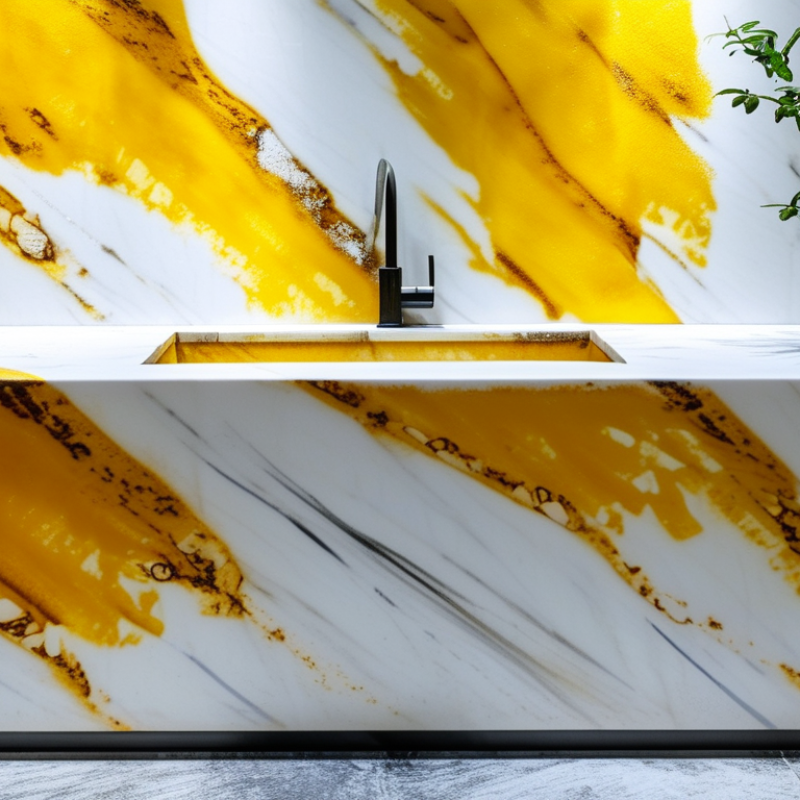
White marble rarely turns yellow from one cause. The discoloration often develops slowly beneath the polished surface. Iron minerals inside the stone can oxidize when they meet water and oxygen. This reaction creates yellow, amber, or rusty patches.
Moisture is another frequent cause. Water may enter through grout joints, cracks, or an unsealed underside. It can carry rust from metal supports or nearby fasteners. Old adhesive, cement residue, and low-quality filling materials may also darken as they age. In kitchens, cooking oil can penetrate microscopic pores and produce a warm yellow film. Wax and unsuitable sealers may intensify the effect. A quick wipe can appear successful, but the stain may remain below the surface.
The repair depends on the source, not only the color. A trained stone technician should test a small hidden area before cleaning the whole slab. A poultice may draw out oil or soluble rust, while deep oxidation can require repeated treatment. Avoid acidic cleaners, abrasive powders, and household bleach. They can etch marble or spread the discoloration. Drying the stone completely is essential. Otherwise, moisture may return through the same path. One detail is often overlooked: yellowing may come from the backing material, not the marble itself. If the cause is not identified, even careful cleaning may provide only a temporary improvement.
How to Identify the Source of Marble Yellowing
Why Is My White Marble Turning Yellow and How to Fix It?
How to Identify the Source of Marble Yellowing
Yellow marble needs diagnosis before cleaning. The color may come from iron oxidation, trapped moisture, old wax, adhesive, or organic staining. Natural stone can also darken when cement residue remains below the surface. A common field mistake is treating every yellow mark as dirt.
Start with a close inspection. Rust-like patches often indicate iron-bearing minerals or metal contact. A yellow band near grout may suggest moisture migration. Sticky, uneven shine can indicate wax or an incompatible coating. Use a moisture meter, then compare readings from the yellow area and a dry section. ASTM C97/C97M measures stone water absorption, but it does not identify the stain source. That distinction matters.
Test gently. Place a clean, damp white cloth on the surface for several minutes. If the cloth picks up residue, a surface coating may be involved. Do not use acidic cleaners; acids can damage calcium-based marble. The Natural Stone Institute’s Dimension Stone Design Manual recommends identifying the stain type before selecting a poultice or cleaner. Its technical guidance separates oil, organic, rust, and water-related stains because each needs a different treatment.
For suspected rust, document the pattern and inspect nearby fasteners, furniture feet, and wet areas. For moisture, correct the water path before polishing. A poultice may draw out some stains, but repeated applications can leave a dull halo. Professional testing is wiser when the yellowing lies beneath the polished face. The diagnosis may still be imperfect. That is normal with layered stone damage.
How to Clean Yellowed White Marble Safely
White marble usually turns yellow for three reasons: oxidized iron, old wax, or trapped moisture.
Iron-bearing minerals can darken when water and oxygen enter tiny pores. The Natural Stone Institute identifies marble as a calcium-carbonate stone, making it sensitive to acids. Calcite, its primary mineral, ranks only 3 on the Mohs hardness scale. It scratches easily.
How to clean yellowed white marble safely starts with dry dust removal.
Use a soft microfiber cloth and a pH-neutral stone cleaner, ideally around pH 7. Apply it with lukewarm water, then rinse with clean water. Dry the surface immediately. This prevents another mineral film from forming.
Never use vinegar, lemon juice, acidic bathroom cleaner, abrasive powder, or rough scrub pads.
They may remove residue while permanently dulling the polish.
The Natural Stone Institute’s care guidance supports neutral cleaners and non-abrasive tools. ASTM C97/C97M testing also explains why slabs behave differently; absorption varies between stones.
Test any cleaner on a hidden 5-centimeter area first. It feels slow. Skipping it is the common mistake.
If yellowing remains, a professional may use an absorbent poultice to draw out iron or embedded residue. Do not mix cleaning chemicals, and avoid sealing damp marble. A sealer can reduce staining, but it cannot correct existing discoloration.
How to Remove Deep Stains and Restore Marble Color
White marble can turn yellow for several reasons. Iron deposits may oxidize inside the stone, especially near wet areas. Old wax, sealer, or trapped cleaning residue can also create a dull yellow film. Deep stains often appear around sinks, flowerpots, and shower edges. The cause matters. Surface cleaning alone may not work.
Begin with a pH-neutral stone cleaner and a soft microfiber cloth. Test it on a hidden corner. For a deep organic stain, prepare a poultice with an absorbent powder and a suitable peroxide-based cleaner. Apply it over the stain, cover it with plastic, and leave it for 24 to 48 hours. Remove the cover, let the area dry, then lift the poultice gently. Repeat if needed. Stubborn iron stains require professional treatment because harsh chemicals can permanently damage marble.
Never use vinegar, lemon juice, abrasive powders, or chlorine bleach. They can etch the surface and make yellowing look worse. Keep the marble dry during treatment. Moisture can push stains deeper. I used to assume one application should solve everything. That expectation is often wrong. Some stains need several treatments, and some discoloration has entered too deeply to remove completely. After cleaning, a stone specialist may hone and polish the surface, then apply a breathable sealer. This can restore a more even color, but it cannot hide every underlying defect.
How to Prevent White Marble from Turning Yellow Again
White marble usually turns yellow because iron minerals oxidize, moisture enters tiny pores, or old wax and sealer layers trap grime. Acidic cleaners can worsen the surface. The Natural Stone Institute recommends pH-neutral cleaners and non-abrasive tools for routine marble care. Its restoration guidance also stresses testing every treatment in a hidden area. That step feels slow, but it prevents a small stain from becoming a costly repair.
Prevention starts with drying. Wipe spills quickly, especially coffee, cooking oil, and muddy water. Use a soft microfiber cloth instead of rough paper towels. Seal the marble only after confirming that moisture is not trapped beneath it. A breathable impregnating sealer may reduce absorption, but it will not stop oxidation inside the stone. The U.S. Geological Survey’s 2024 Mineral Commodity Summaries places dimension stone among established mineral industries, yet marble quality still varies greatly by quarry and slab. One cleaning formula cannot suit every surface. This is where many maintenance plans fail.
Tips: Clean weekly with a pH-neutral stone cleaner. Avoid vinegar, lemon, bleach, and abrasive powders. Keep rugs dry near sinks. Test water absorption by placing a few drops on an unseen area for 10 minutes. If the spot darkens, consult a stone-care professional. Do not keep adding sealer; layered products can yellow and become difficult to remove. A yearly inspection is sensible, although some homes may need one sooner.
Why White Marble Turns Yellow: Cleaner pH Guide
Acidic cleaners can etch marble, while strong alkaline products may damage protective sealers and leave the surface more vulnerable to stains. The values below are approximate pH midpoints; formulas vary by product.
How to fix and prevent yellowing:
Yellow discoloration may come from iron oxidation, trapped moisture, old wax or sealer residue, or staining beneath the surface. Remove residue with a marble-safe cleaner, dry the stone thoroughly, and use a professional poultice for deep rust or organic stains. For routine care, use a pH-neutral stone cleaner, wipe spills immediately, avoid vinegar and abrasive powders, and reseal the marble when water is absorbed quickly instead of beading on the surface.
Conclusion
Why is my white marble turning yellow? This change can result from trapped moisture, aging sealers, metal residue, cooking oils, soap buildup, or unsuitable cleaning products. Identifying the source is the first step toward effective treatment. Examine whether the discoloration is on the surface or coming from deeper within the stone, and consider nearby plumbing, furniture, rugs, or products that may have caused the stain. Avoid acidic cleaners, abrasive powders, and harsh chemicals, as they can etch or permanently damage marble.
For light yellowing, gently clean the surface with a pH-neutral stone cleaner, soft cloth, and clean water, then dry it thoroughly. Deep stains may require a carefully prepared poultice or professional stone restoration to draw the discoloration from the marble without weakening its finish. Once the color is restored, help prevent future yellowing by controlling moisture, wiping spills quickly, using protective mats and coasters, and resealing the marble when necessary. Regular, gentle maintenance is the safest way to preserve its bright appearance.

 Gem Marble