7 Best Reasons to Choose Honed Marble Over Polished Marble?

Time:2026-11-25 Author:Oliver
0%

Why choose honed marble over polished marble? The answer often begins with how a room feels at eye level. Honed marble has a soft, matte surface rather than a mirror-like shine. Light from a kitchen window spreads gently across it. Fingerprints and reflections tend to draw less attention. The finish can make a busy room feel quieter.

Stone-restoration specialist Fred Hueston is a useful expert to consult when weighing stone finishes. The following is a practical paraphrase, not a verified direct quotation: “Choose a marble finish for the way you live with it, not only for the way it looks on day one.” That distinction matters. Honed marble may suit a family kitchen, a calm bathroom, or a floor where glare feels distracting. It can also make small scratches less conspicuous. But honed does not mean maintenance-free. Marble can still stain or etch, and pale marks from acidic spills may be visible on the surface. Sealers and prompt cleanup remain important.

This guide explores seven reasons homeowners and designers consider honed marble over polished marble. It looks at appearance, everyday use, lighting, upkeep, and design flexibility. It also notes where polished stone may be the better fit. The right choice depends on the stone, the room, and your tolerance for visible wear. Details matter. A sample viewed under showroom lights may look different beside your own sink or window. For that reason, compare samples in the actual space before deciding.
7 Best Reasons to Choose Honed Marble Over Polished Marble?

Honed and Polished Marble: Understanding the Difference

Honed and polished marble differ mainly in how their surfaces are finished. Honed marble is ground to a smooth, low-sheen surface, while polished marble is buffed until it reflects light. Run your hand across a honed sample and it may feel softly matte; a polished sample often feels slicker and looks more vivid.

Light changes the room. Polished marble can brighten a dim hallway by reflecting windows and lamps, but it may also make glare more noticeable. Honed marble gives a quieter look and can suit busy floors because small scratches are less obvious. Still, neither finish is damage-proof. Lemon juice or vinegar can etch marble, leaving dull marks, and honed surfaces may show spills more readily if they are not promptly wiped.

Care matters. Both finishes need gentle, stone-safe cleaning and periodic assessment for sealing; a sealer can reduce staining, but it cannot prevent etching. One easy mistake is choosing from a tiny showroom sample. Ask to see a larger piece under lighting similar to your room. The difference can be surprising. Honed marble is not automatically easier to maintain, and polished marble is not always too delicate for daily use. The right choice depends on light, traffic, and the marks you are willing to live with.

How a Honed Finish Reduces Glare and Softens a Room

Polished marble catches light like a mirror, which can make a bright room feel sharper. A honed finish has a matte, low-sheen surface that scatters light rather than reflecting it in crisp highlights. The effect is subtle, but it can reduce distracting glare across a countertop or floor. The stone still has natural movement and color; it simply looks quieter.

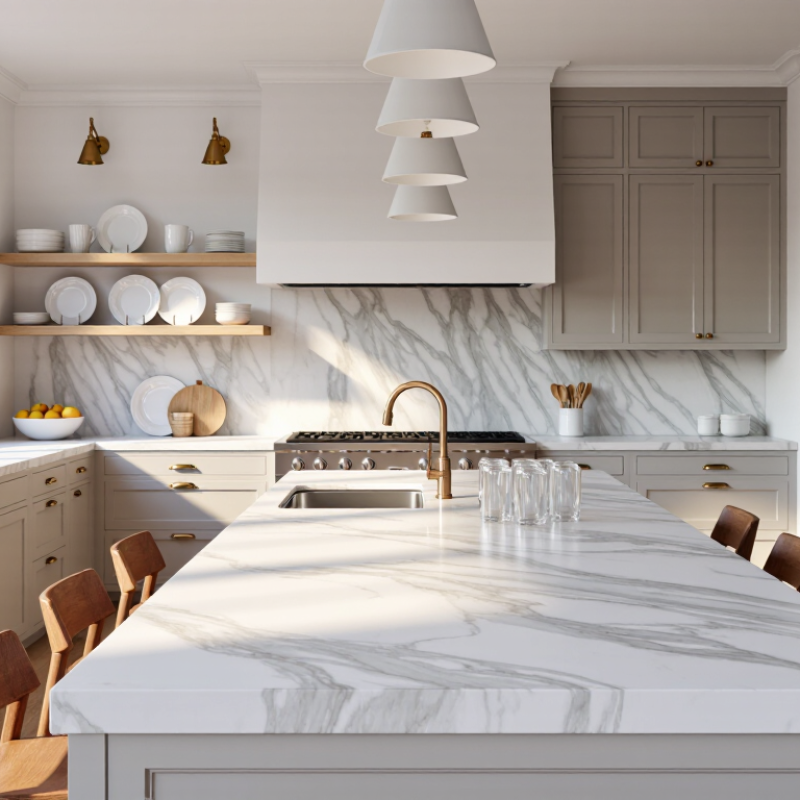
Picture morning sun falling through a window onto a honed marble island. You are less likely to see a bright flash bouncing toward your eyes, and the room’s shadows feel softer. Under pendant lights, the surface can also look calmer than polished stone. Not flat. Just gentler. This finish works especially well where glossy surfaces, pale cabinetry, and strong daylight might otherwise compete for attention.

There is a practical trade-off worth considering. Honed marble may absorb spills more readily than polished marble, depending on the stone and its treatment, so sealing and prompt cleanup matter. It can also show marks differently; matte does not mean mark-proof. Ask a stone professional to compare samples in your actual lighting, since a small showroom swatch can be misleading. I would not choose honed marble only to eliminate glare; its softer appearance is the stronger reason.

Why Honed Marble Can Provide More Everyday Traction

Honed marble has a soft, low-sheen surface that can offer more everyday traction than highly polished stone. Its tiny surface texture may give shoes and bare feet more grip, especially in a bathroom or entryway where droplets gather near the sink or door. The difference is practical, not dramatic. A honed floor can still become slippery when wet, so finish alone should not guide a safety decision.

For a useful benchmark, ANSI A326.3 sets a wet dynamic coefficient of friction (DCOF) of 0.42 for certain level interior flooring expected to get wet. This is a test threshold, not a guarantee against slips, and it does not prove that every honed marble performs better than every polished one. Stone type, sealer, cleaning residue, and wear all affect results. Ask for test data for the specific stone and finish, and consider a sample under damp conditions. Matte surfaces can also show oils or dark spills more readily. A trade-off. I’d choose honed marble for a calmer look and added everyday grip, but still use bath mats where water routinely pools.

7 Best Reasons to Choose Honed Marble Over Polished Marble? — Why Honed Marble Can Provide More Everyday Traction

Everyday Consideration Honed Marble Polished Marble Why It Matters
1. Everyday traction The matte, less-reflective surface may provide more grip underfoot than a smooth polished finish, depending on the stone and treatment. The smooth, glossy surface can feel more slippery when wet or contaminated. A useful consideration for floors in kitchens, entryways, and other frequently used areas. Neither finish is automatically slip-proof.
2. Appearance of minor scratches Small surface marks may be less conspicuous on a matte finish. Scratches can stand out more when they interrupt the glossy reflection. The stone can still scratch in either finish; the difference is mainly how visible marks may be.
3. Visibility of water spots Water marks and dried droplets are often less obvious on a low-sheen surface. Reflections may make droplets, streaks, or residue easier to notice. Both finishes benefit from prompt cleanup, especially in bathrooms and around sinks.
4. Low-glare look Diffuses light and creates a soft, understated appearance. Reflects more light and produces a brighter, high-gloss appearance. Honed stone can suit spaces where a calmer visual effect is preferred.
5. Natural stone character Veining and color appear with less surface shine, giving the stone a more muted look. Gloss can deepen color and emphasize reflections across the stone. The choice is aesthetic as well as practical; samples viewed in the room’s lighting can help.
6. Day-to-day visual upkeep May show fewer reflections from fingerprints and light surface residue. Smudges and streaks may be more noticeable in reflected light. Neither finish eliminates cleaning. Use a stone-safe cleaner and follow the stone supplier’s care guidance.
7. Finish flexibility Can be specified for a subdued look and may be available in different levels of texture. Typically selected for a smooth, reflective surface. Ask for the actual finish sample and product-specific slip-test information, particularly for wet areas.
Important note: Marble is a natural, porous stone and can be etched by acids such as lemon juice or vinegar. Sealer can help reduce liquid absorption but does not make marble stain-proof, scratch-proof, or slip-proof. Actual traction depends on the specific stone, finish, installation, maintenance, and whether the surface is wet.

How Its Matte Surface Makes Minor Wear Less Noticeable

Honed marble has a soft, matte finish that scatters light instead of reflecting it sharply. That makes small scratches, faint water marks, and everyday scuffs less conspicuous than they often are on polished stone. A polished surface can catch window glare and highlight each change in its smooth sheen. Honed marble tends to look more even under the same light. Subtle difference. A dragged chair or a dropped utensil can still leave a mark, but it may not stand out from across the room.

The finish is not damage-proof. Acidic spills, such as lemon juice or vinegar, can etch marble and leave dull spots on either finish. On honed stone, those spots may blend in better, though close inspection can reveal a change in texture. Wipe spills promptly with a soft cloth and use a cleaner labeled safe for natural stone. Avoid abrasive pads; they can create uneven patches. In busy kitchens, honed marble may feel more forgiving between cleanings, especially where sunlight skims across a countertop. Still, darker stones and broad matte surfaces can show fingerprints or oily residue. Lighting, color, and daily habits all matter. Honed marble hides some wear, not every trace of use.

Where Honed Marble Works Best and How to Care for It

Honed marble suits rooms where a soft, low-glare surface feels more comfortable than a glossy one. Its matte finish works well on bathroom floors, shower walls, kitchen backsplashes, and fireplace surrounds. In a busy kitchen, it can soften reflections from pendant lights and make veining look quieter. The finish may also make small scratches less noticeable. That helps. It does not make marble stain-proof or scratch-proof.

For floors, consider the actual surface texture, not just the word “honed.” A smooth honed slab can still become slippery when wet, so ask a stone professional about traction and suitable finishes. In showers, choose an installation with careful drainage and routine ventilation. Marble can develop dull spots from acidic products, including lemon juice and vinegar. I would not call it carefree; its changing surface is part of the appeal, but it may frustrate anyone who expects a uniform look.

Care is simple, though consistency matters. Wipe spills promptly with a soft cloth, especially wine, coffee, oil, or citrus. Use a pH-neutral cleaner made for natural stone, and avoid abrasive pads or acidic sprays. Seal the marble when recommended for the specific stone and location; sealing can slow absorption, but it cannot prevent etching. Check for water absorption periodically, or follow the installer’s maintenance guidance. A small test area is wise before using any new cleaner.

FAQS

What is the main difference between honed and polished marble?

Honed marble has a smooth, matte surface. Polished marble is buffed to reflect more light and often feels slicker.

Which marble finish works better in a dim hallway?

Polished marble can reflect window and lamp light, making the hallway seem brighter. It may also create more glare.

Does honed marble hide everyday scratches?

Small scratches may be less noticeable on honed marble. It can still scratch, and it is not damage-proof.

Is honed marble a good choice for a busy kitchen?

It can soften reflections from pendant lights and make veining look quieter. Wipe up coffee, oil, and citrus quickly. Not carefree.

Can honed marble become slippery when wet?

Yes. A smooth honed slab may still be slippery, so ask a stone professional about traction before choosing it for a floor.

What can cause dull marks on marble?

Acidic liquids, including lemon juice and vinegar, can etch either finish. The marks are not ordinary stains.

Does sealing prevent marble from etching?

No. Sealer can slow absorption and reduce staining, but it cannot prevent etching. Follow guidance for your stone and location.

How should I clean marble day to day?

Use a soft cloth and a pH-neutral cleaner made for natural stone. Avoid abrasive pads and acidic sprays. Test new cleaners on a small area.

How can I compare finishes before buying?

Ask to see a larger piece under lighting similar to your room. A tiny sample can be misleading. I still find that easy to underestimate.

Conclusion

Honed and polished marble differ mainly in their surface finish: polished marble is glossy and reflective, while honed marble has a smooth, matte appearance. Why choose honed marble over polished marble? Its understated finish can reduce glare and help a room feel softer and more relaxed, especially in spaces with abundant natural light. Honed surfaces may also provide more everyday traction than polished ones, though neither finish should be considered slip-proof.

The matte surface can make small scratches, etching, and everyday wear less noticeable, which is useful in busy areas. Honed marble works well on floors, countertops, and other surfaces where a quieter look is preferred. To keep it looking its best, clean spills promptly, use gentle cleaners suitable for natural stone, and protect the surface from acidic substances. Regular care helps preserve its appearance and makes it a practical, timeless choice for many interiors.

Oliver

Oliver

Oliver is a seasoned marketing professional with a wealth of expertise in driving brand awareness and engagement. With a deep understanding of our company's product offerings, he consistently delivers high-quality content that enriches our professional blog. His insights not only shed light on......