When considering the world of marble, one question often arises: "Why does marble vary so much in price?" Marble is not just a beautiful natural stone; it's also an investment into aesthetics and durability. The price fluctuations can be surprising and sometimes confusing for both homeowners and designers. Understanding the factors behind these variations can help in making informed decisions.
Several elements contribute to the price of marble, including quarry location, rarity, and color. For instance, certain quarries produce unique shades or patterns, which can dramatically increase value. Additionally, the quality of the stone plays a vital role. Imperfections, such as veining or cracks, can influence cost.
Moreover, market demand impacts pricing significantly. Trends in home design and architecture create peaks in demand for specific marble types. Thus, recognizing these factors can illuminate the complexities surrounding marble pricing, but it also raises questions. Are we valuing the right traits in marble? As consumers, we must reflect on our choices and their implications. The interplay of aesthetics and pricing presents a unique challenge in our quest for the perfect marble.
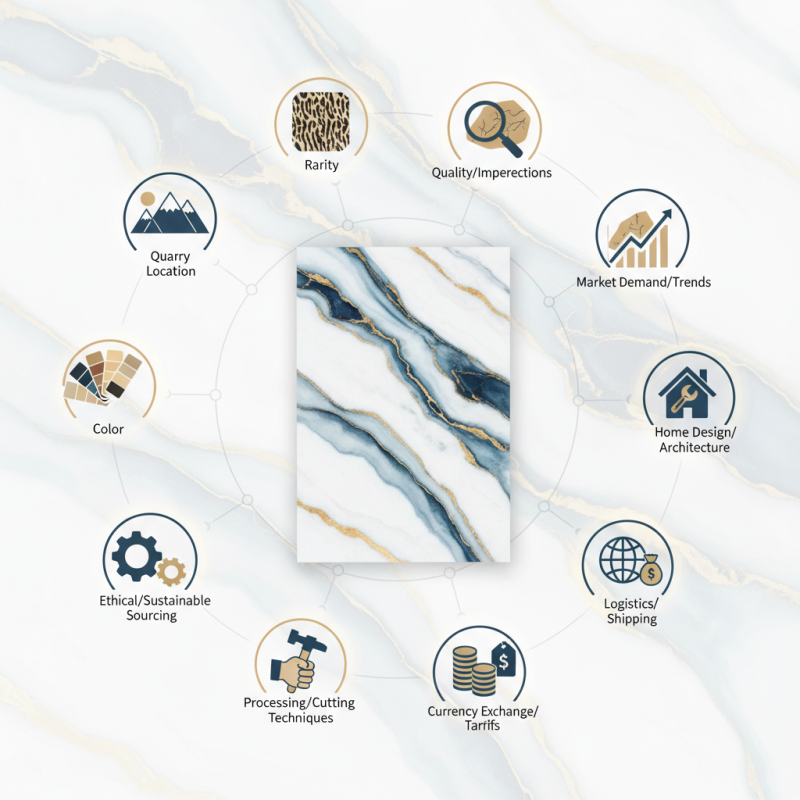
Factors Influencing Marble Pricing: An Overview
Marble pricing is influenced by various factors that shape its market value. Quality is paramount. Higher-grade marble features superior aesthetics, durability, and finish. These stones often come from renowned quarries in Italy or Greece, where thousands of dollars per square meter are not uncommon. In contrast, lower-grade marbles, sourced from less prestigious locations, can be significantly cheaper.
The extraction and transportation processes also impact costs. Marble mining is labor-intensive, requiring skilled workers and sophisticated machinery. Reports indicate that quarrying can contribute up to 60% of the final product price. Additionally, logistics play a crucial role. Transporting heavy marble slabs incurs high shipping fees, especially for overseas deliveries. Local suppliers may offer competitive prices, but imports often drive up costs due to tariffs and handling charges.
Market demand shifts can also create price volatility. For instance, a surge in demand for home renovations can lead to higher prices. Trends in design influence preferences for specific colors and patterns, making certain marbles more sought after. A recent industry analysis highlighted that the luxury segment particularly shapes market dynamics. Awareness of these factors is essential for anyone looking to invest in marble for personal or commercial use.
Quality of Marble: Grades and Their Impact on Cost
The quality of marble plays a significant role in determining its price. Marble is graded based on color, veining, and clarity.
Higher-grade marble features more uniform patterns and fewer imperfections, making it more expensive. Low-grade marble may have visible flaws or inconsistent colors,
which can make it more affordable, but also less desirable for high-end projects.
Different quarry locations also influence marble grading. Marbles from renowned quarries often carry a premium due to their historical value and consistent quality.
In contrast, lesser-known sources might produce lower-grade material. Buyers must weigh these factors against their project's needs.
Aesthetic appeal is vital, as some applications require flawless surfaces, while others might tolerate minor imperfections.
Understandably, buyers can feel overwhelmed by choices. It's essential to consider not just the cost but the potential long-term effects of marble quality.
Investing in higher-quality options may mean lower maintenance and better durability. However, some people choose based on immediate budget constraints,
potentially sacrificing quality. Evaluating these aspects requires careful reflection and informed decision-making.
Source of Marble: Geographic Variations in Pricing
Geographic variations play a significant role in the pricing of marble. Natural stone is sourced from various regions across the globe. Each location offers unique characteristics, which influence the price. For instance, Italian marble is renowned for its quality and aesthetic appeal, often leading to higher costs. Reports indicate that marble from Italy can be 20-30% more expensive than that from other countries due to its premium reputation.
Factors contributing to these geographic price differences include mining practices and transportation costs. Some areas have easier access to marble deposits, reducing extraction expenses. Conversely, remote locations may incur higher shipping fees, adding to the final price. It's crucial to consider that local demand also impacts pricing. Regions with a high demand for marble often see inflated prices, while others see more reasonable rates based on supply.
Furthermore, the quality within these sources can vary widely. Lower-grade marble may be produced alongside high-quality stone from the same quarry. This inconsistency can confuse buyers, making it challenging to know whether they are getting a fair deal. Utilizing data from industry reports can help buyers make informed decisions. Understanding these geographic factors helps explain why marble prices can fluctuate significantly.
Market Demand: How Trends Affect Marble Prices
Market demand plays a crucial role in determining marble prices. Recent trends show a growing interest in natural stone, especially in architecture and interior design. Homeowners and designers favor marble for its aesthetic appeal and unique characteristics. This surge in popularity has caused prices to fluctuate significantly.
The demand for specific colors and patterns also impacts pricing. Rare types of marble, like Calacatta, command higher prices due to their limited availability. Consumers are often willing to pay more for distinctive looks. Seasonal changes can further influence sales, with some months seeing a spike in purchases, particularly during home renovation seasons.
However, it’s worth noting that not all marble is equally desirable. Some varieties are less sought after, which may lead to lower prices. This disparity raises questions about value perception. Economic factors, such as inflation and market saturation, also play a role in shifting demands. Understanding these trends is essential for both buyers and sellers navigating the marble market.
Why Does Marble Price Vary So Much? Top 10 Factors Explained
Processing Techniques: Cost Implications of Finishing Methods
Processing techniques play a vital role in determining marble prices. Different finishing methods not only affect the aesthetics but also influence the costs involved in production. For example, polished marble tends to be more expensive than honed marble. The polishing process requires specialized equipment and extensive labor, leading to higher overall costs. Additionally, intricate finishes, like convoluted edges or special treatments, can significantly raise the price.
Understanding the cost implications of various finishing methods is crucial for buyers. Consider the purpose of your project. If durability is essential, investing in polished finishes might be worthwhile. On the other hand, if budget constraints are a concern, opting for simpler finishes could save money without sacrificing quality.
Tip: Always ask suppliers about the specific processing methods used for their marble. This knowledge can guide your purchasing decisions. You should also compare prices from multiple sources. This can help you find the best deal without compromising on quality. Remember that sometimes a lower price could indicate lower quality or less thorough processing.
FAQS
: Marble quality is graded based on color, veining, and clarity. Higher grades have uniform patterns with fewer flaws.
Marbles from well-known quarries often cost more due to their historical value and consistent quality compared to lesser-known sources.
Increasing interest in natural stone causes prices to fluctuate. Unique colors and patterns, like Calacatta, may command higher costs.
Sales can rise during specific months, especially home renovation seasons. This seasonal demand affects overall pricing.
No, some varieties are less sought after, leading to lower prices. Understanding value perception is vital for buyers.
Different finishing methods impact aesthetics and production costs. Polished marble is usually more expensive due to extensive labor.
Assess the project's purpose. Polished finishes offer durability, while simpler options might fit tighter budgets without sacrificing quality.
Always ask suppliers about specific processing methods. Comparing prices from multiple sources helps find quality options at reasonable costs.
Conclusion
The question "Why does marble vary so much in price" can be attributed to several key factors that influence its market valuation. First and foremost, the quality of marble plays a significant role, as different grades offer varying aesthetics and durability, which directly impacts cost. Additionally, the source of the marble, including geographic variations, affects pricing due to transportation costs and availability.
Market demand is another critical factor, as trends in design and construction can lead to fluctuations in prices. Furthermore, the processing techniques employed in transforming raw marble into finished products can also have cost implications; more intricate finishing methods tend to increase the final price. Understanding these elements is essential for consumers and industry professionals alike when navigating the marble market.

 Gem Marble