Why Choose the Right Marble Slab for Your Kitchen?

Time:2026-09-26 Author:Amelia
0%

Marble can make a kitchen feel calm and distinctive. It can also stain, etch, and show wear. The right slab is not simply the whitest one. It must suit the way your household cooks, cleans, and uses its counters.

Houzz’s 2024 U.S. Kitchen Trends Study reported that engineered quartz was selected for 42% of renovated kitchen countertops, while marble was selected for about 5%. Those figures describe homeowner choices, not a quality ranking. Still, they show that marble is a considered choice rather than a default. How to choose the right marble slab for a kitchen starts with understanding the stone’s real-world behavior. Marble is a natural material, so veining, color, and surface variation differ from slab to slab. Bring cabinet samples and flooring details to the stone yard. View the full slab, not just a small sample. Ask the supplier about the stone’s finish, sealing recommendations, and care requirements. A polished surface may highlight the veining, while a honed finish can soften glare but still needs proper care. Small details matter.

There is no perfect slab. A pale surface may show coffee or lemon marks more clearly; a dramatic vein can complicate seam placement. Some advice makes marble sound effortless. It isn’t. This guide explains how to assess appearance, durability, maintenance, and installation before choosing, so the stone fits both your kitchen and your tolerance for patina.
Why Choose the Right Marble Slab for Your Kitchen?

Understanding Marble as a Kitchen Surface

Marble is a natural stone, so no two slabs look exactly alike. Fine veins, cloudy patches, and subtle color shifts give a kitchen surface depth that printed patterns rarely match. Look at the full slab, not only a small sample; a vein may cross the counter in an unexpected direction. Beautiful, but not uniform.

Marble is also softer and more porous than many homeowners expect. Lemon juice, vinegar, and wine can dull its surface, sometimes within minutes. Wipe spills promptly. A penetrating sealer can reduce absorption, but it does not make marble stain-proof or prevent etching. Daily care matters.

Consider how the kitchen is used. A busy household may prefer a honed finish, which can make small scratches and etch marks less conspicuous than a polished finish. It will still need attention. Ask the fabricator how seams, edges, and sink cutouts will be handled, and inspect the planned layout against the slab’s veining. Those details affect both appearance and cleaning.

There is a real trade-off here. Marble can develop marks with ordinary use, and some owners come to value that lived-in surface; others find it frustrating. Be honest about which response sounds more like you.

Comparing Slab Types, Veining, and Color

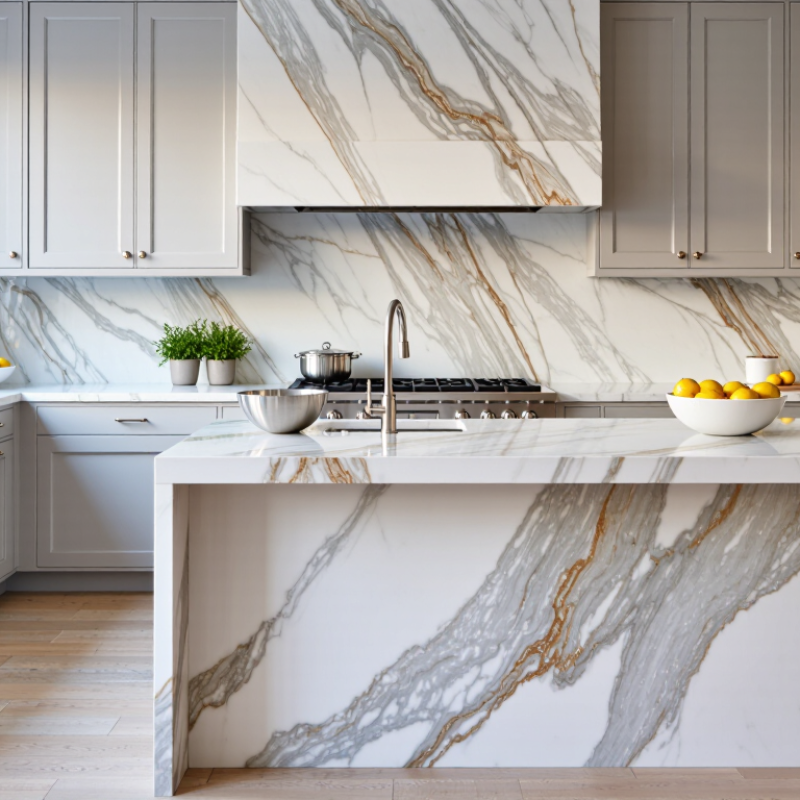
Marble slabs vary in background color, veining, and visual movement. Carrara-style marble often has a soft gray-white base with fine, cloudy veins. Calacatta-style slabs may show brighter white backgrounds and broader, more dramatic markings. These patterns vary from slab to slab, even within the same stone category. Look closely. A vein that seems subtle in a small sample may dominate a full kitchen island.

Color affects the room’s overall feel. Warm ivory and beige tones can soften wood cabinets, while cool white and gray often suit crisp, modern finishes. Darker marble can create strong contrast, but dust and water marks may show more readily. Polished surfaces reflect more light; honed finishes feel quieter and can make etching less noticeable, though they may still stain. Marble contains calcite, so acidic spills such as lemon juice can dull its surface.

Tips: View the actual slab in natural and indoor light. Check where prominent veins would fall around the sink, cooktop, and seams. Ask how the stone should be sealed and maintained. A perfect match is unlikely; sometimes the pattern you choose looks different once installed.

Evaluating Durability, Porosity, and Maintenance

Marble’s durability depends on its mineral structure, finish, and the way a kitchen is used. Calcite-rich marble can etch when lemon juice or vinegar sits on the surface. A dull ring is often surface damage, not a stain. I would not judge a slab from a small sample alone. Veining and mineral pockets can vary across one full slab, and that variation deserves a close look.

Ask for test results for the specific stone lot, not just a general product description. ASTM C97/C97M measures water absorption by percentage, while ASTM C880/C880M reports flexural strength. These figures help compare slabs, but they do not make marble stain-proof or chip-proof. Lower absorption can reduce water uptake; it cannot prevent acidic etching. Small detail. It matters. The Natural Stone Institute’s care guidance supports prompt spill cleanup and suitable stone-safe cleaners. Sealers may slow staining, but they do not stop etching. Wipe coffee, oil, and citrus quickly, and test any cleaner on a hidden area. Maintenance sounds simple. Real kitchens are less tidy.

Why Choose the Right Marble Slab for Your Kitchen?

Evaluate durability, porosity, and maintenance before choosing a slab.

How to read this chart: Calcite, the dominant mineral in many marbles, has a Mohs hardness of 3. Dolomite is about 3.5–4; 3.75 is shown here as a representative midpoint. These are mineral reference values, not a scratch-resistance rating for a specific slab. Marble can etch when exposed to acidic foods, so use cutting boards and wipe spills promptly. Porosity varies by slab and finish: ask your stone professional about absorption and sealing needs, and use a pH-neutral stone cleaner.

Matching Slab Features to Kitchen Use and Design

A marble slab should suit the way your kitchen works, not just the way it looks in a showroom. For a busy counter near the sink, consider how you feel about wiping spills promptly. Marble can etch when acidic foods, such as lemon juice or tomatoes, sit on the surface. Sealing helps reduce staining, but it does not make marble stain-proof. That distinction matters.

Think about finish and pattern in the room’s actual light. A honed surface has a softer, matte appearance and can make small marks less conspicuous, though it may absorb spills more readily. Polished marble reflects light and often makes veining look more pronounced. Bring a sample near your cabinets and view it in morning and evening light. A dramatic vein may look striking on a large island, but feel busy across several counters.

Slab selection also involves practical details. Ask to inspect the full slab, since a small sample cannot show every vein or color shift. Check where seams may fall around sinks, corners, and cooktops. If you cook often, a quieter pattern can make crumbs and everyday clutter easier to live with. I would not choose solely by appearance; still, durability expectations vary, and marble will develop signs of use. Decide whether that changing surface feels welcome before committing.

Selecting a Slab by Quality, Size, and Budget

Why Choose the Right Marble Slab for Your Kitchen?

Selecting a Slab by Quality, Size, and Budget

Choosing marble for a kitchen begins with more than color. Inspect the slab in person, if possible, under bright, neutral light. Look for cracks, filled pits, uneven veining, and changes in thickness. Natural variation is expected, but a fissure near a sink cutout may become a practical concern. Ask the fabricator how the slab will be supported and where seams are likely to fall. Photos rarely show these details well.

Size affects both appearance and waste. Measure the countertop runs, backsplash, and island before comparing slabs. A large island may need a broad, consistent section, while smaller pieces can be planned around natural veining. Confirm usable dimensions, not just the slab’s overall size. A little planning matters. It is easy to focus on one dramatic vein, then find it disappears at a seam. That detail can be overlooked.

Tips: Set a budget that includes fabrication, edge profiles, sealing, and installation—not just the stone. Request a written estimate and ask what could change the price. Marble needs routine care; acidic spills such as lemon juice can dull its surface. Test a sample with your usual cleaners, though one sample cannot predict every slab. Choose a finish that suits how you cook, not just how it photographs. Matte finishes can show marks differently. The best choice is a slab whose natural quirks you can live with.

FAQS

Why does each marble countertop look different?

Marble is natural stone, so veins, cloudy patches, and color shifts vary. No two slabs match exactly.

Can lemon juice damage a marble surface?

Yes. Acidic spills can dull marble within minutes. Wipe up lemon juice, vinegar, and wine promptly.

Does sealing make marble stain-proof?

No. A penetrating sealer can reduce absorption, but it cannot prevent every stain or etch mark.

Is honed marble easier to live with than polished marble?

Honed marble can make small scratches and etch marks less noticeable. It still needs regular care.

What should I check before choosing a slab?

View the full slab in natural and indoor light. A vein that looks subtle on a sample may dominate an island.

How do marble colors affect a kitchen?

Warm ivory can soften wood cabinets. Cool white and gray suit crisp finishes, while darker stone creates contrast. Dust may show more.

What details should I discuss with the fabricator?

Ask about seams, edges, and sink cutouts. Check how prominent veins will fall near the sink and cooktop.

Will marble look exactly as expected after installation?

Not always. Patterns can feel different across a large counter. That uncertainty is part of the choice, though it may frustrate me later.

Is marble a good fit for a busy household?

It depends on your tolerance for marks. Some owners value the lived-in look; others find it tiring. A perfect, untouched surface is unlikely.

Conclusion

Choosing the right marble slab for a kitchen means balancing appearance with everyday performance. Marble varies in color, veining, and pattern, so comparing full slabs can help you find a look that suits your cabinets, lighting, and overall design. Consider how the stone’s natural character will work with the room, rather than focusing on a small sample alone. The question “How to choose the right marble slab for a kitchen” also involves understanding practical differences: marble is porous and can be susceptible to staining, etching, and scratches, so its finish, sealing needs, and maintenance routine matter.

Match the slab to how you use your kitchen. A busy cooking space may call for a surface whose upkeep fits your habits, while a less-used area may allow more emphasis on distinctive veining. Before deciding, assess the slab’s quality, dimensions, usable area, and price, including any material that may be lost during cutting. Comparing these factors helps you select marble that fits both your design goals and your budget.

Amelia

Amelia

Amelia is a seasoned marketing professional with a wealth of expertise in our company’s core offerings. With an unwavering passion for driving growth and innovation, she plays a pivotal role in shaping our marketing strategies and enhancing brand visibility. A key aspect of her responsibilities......